


What is solar energy?
22-05-2024
11:29
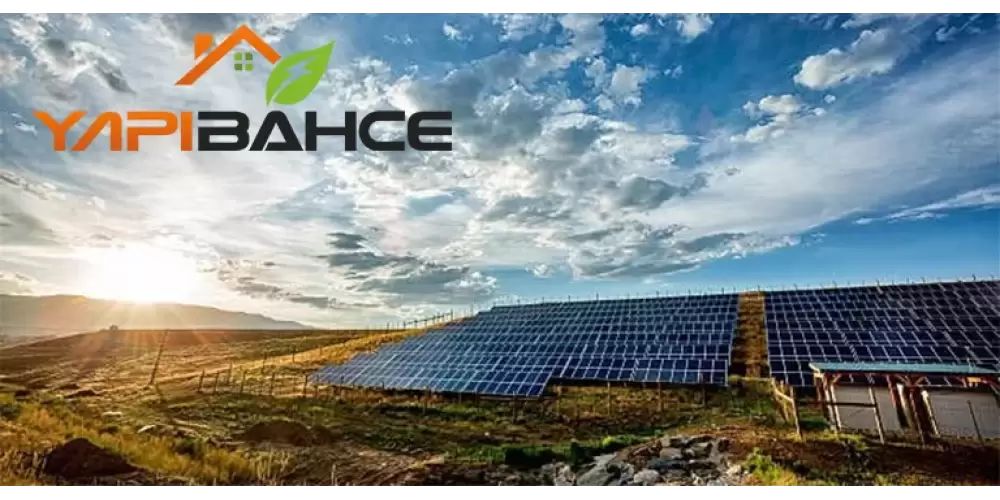
What is the use of solar energy?
The word "solar" literally means the sun and the energy emitted from the sun. Solar energy systems are systems that convert sunlight into electricity.Recent technological advancements have led to increased demand for energy. Furthermore, the increase in electricity consumption is directly proportional to the increase in production capacity of businesses. Fuels such as coal and natural gas are used as raw materials in energy production. According to research, these raw material resources are beginning to deplete and are predicted to run out in the near future. Therefore, the cost of using these fuels in the future is increasing every day. For this reason, the search for alternative energy sources continues. At this point, experts are turning to renewable energy sources. Renewable energy sources are those that can replenish themselves faster than they are consumed. Examples of renewable energy sources include solar energy, wind energy, geothermal energy, energy obtained from ocean waves, and hydrogen energy. While these energies, obtained from various points in nature, primarily generate electricity, they can also be used as energy sources in different fields.
Why Use Solar Energy?
When renewable energy sources are mentioned, solar energy is the first thing that comes to mind. Using sunlight as a source has become one of the most frequently used renewable energy sources in recent times. So, why is using solar energy so important and frequently discussed lately? Let's try to explain this as follows:• Solar energy offers beneficial results for everyone. Solar energy systems can be installed on any suitable site .
• Given the increases in electricity prices, generating your own electricity always offers more advantages.
• The solar panels used are made of durable and robust materials and are reliable.
• If energy generated from solar power is consumed at the point of production, losses from long-distance transmission can be avoided.
• Solar panels require very little maintenance. Rainwater is sufficient for panel cleaning.
• Solar panels have no moving parts and therefore require no maintenance. For this reason, solar energy systems are environmentally friendly energy sources.
• When solar energy is used, the problems caused by raw material imports do not occur.
• Solar energy systems do not require outdoor locations to generate electricity. The system continues to operate as long as it receives sunlight.
• Solar energy systems are not subject to seasonal or regional restrictions because they require sunlight.
• Solar energy systems do not cause effects such as air pollution or health problems. Solar energy is an environmentally and human-friendly renewable energy source.
What is a solar panel?
Solar panels are systems that convert solar energy into electrical energy. Also known as solar panels , the cells on these panels generate a current thanks to sunlight. This current, generated from solar energy, provides the energy needed by electrical devices. Due to their structure, solar panels are quite durable. Once installed, they offer long-term use. Furthermore, solar panels are easily used outside of cities and are particularly needed in rural areas where access to electricity is difficult. The panels have an angled structure, allowing them to easily obtain the necessary sunlight. Solar panels operate quietly. They are also preferred because they do not emit toxic gases. Therefore, solar panels are environmentally friendly systems in terms of radiation emission, which is one of the biggest problems of our time.Where are solar panels used?
It's not entirely accurate to generalize about the uses of solar panels. Solar energy systems can be used in many different areas. Areas where electricity access is frequently problematic often include those where solar panels are installed. Solar panels are also frequently used in agricultural regions, where the need for electricity is high. These areas, especially rural ones far from city centers, often face difficulties in accessing electricity. Solar panels come into play in such situations. The panels, installed on agricultural land, receive sunlight at a perpendicular angle, making them ideal for maximizing solar energy use. However, this isn't the only area where solar panels are used; forest observation areas, lighthouses, mountain lodges, and weather observation points are also examples.What are the different types of solar panels?
Types of Solar Panels They can be examined within two groups: solar panels with polycrystalline and monocrystalline cell structures. Looking at general usage preferences, it is seen that polycrystalline types are preferred more often.1. Polycrystalline Solar Panels : These are the most affordable option among solar panel types. Their low price makes them a popular choice. However, despite being the most frequently chosen, their efficiency is lower. Therefore, while trying to avoid the initial installation cost, efficiency is compromised. Polycrystalline panels are created by melting raw silicon and forming it into square cells. This makes polycrystalline solar panels more affordable than monocrystalline solar panels. Due to their frequent use, their production is also higher. The efficiency rate of polycrystalline solar panels is generally estimated to be between 13-16%.
2. Monocrystalline Solar Panels : Because they are made using high-grade silicon, they are more expensive than polycrystalline panels. However, their efficiency rate is also higher than polycrystalline solar panels. Due to their high efficiency, they are mostly used in space stations, satellites, and advanced technology applications. The efficiency rate of monocrystalline solar panels is between 15-20%.
How do solar panels generate electricity?
The basic principle behind the operation of solar panels is the use of photons to separate electrons from atoms in sunlight. This process results in the production of electricity. In the silicon cells used in solar panel production, sunlight is converted into electricity instead of heat. A current is generated in the cells of the panels by sunlight. Parallel system installations are carried out based on measurements of the amount of energy provided, depending on the region where the panels are installed or the seasonal conditions.The process followed during electricity generation with solar panels;
1. The panels contain photovoltaic (PV) cells in their structure to collect incoming sunlight. Photovoltaic cells receive the incoming light and convert it into electrical current. When sunlight hits the panel, it produces direct current (DC) electricity, causing the PV cells to start working.
2. Direct current electricity alone cannot provide power. Instead, direct current is transmitted to power inverters where other solar energy equipment is located.
3. The moment sunlight comes into contact with the cells on the panel, electrons begin to move.
4. Electric current starts thanks to the nodes capturing the transport of electrons.
5. The solar inverter is used to convert the electricity transmitted via the solar cable (direct current) back into alternating current.