


What is a drill? Where is it used?
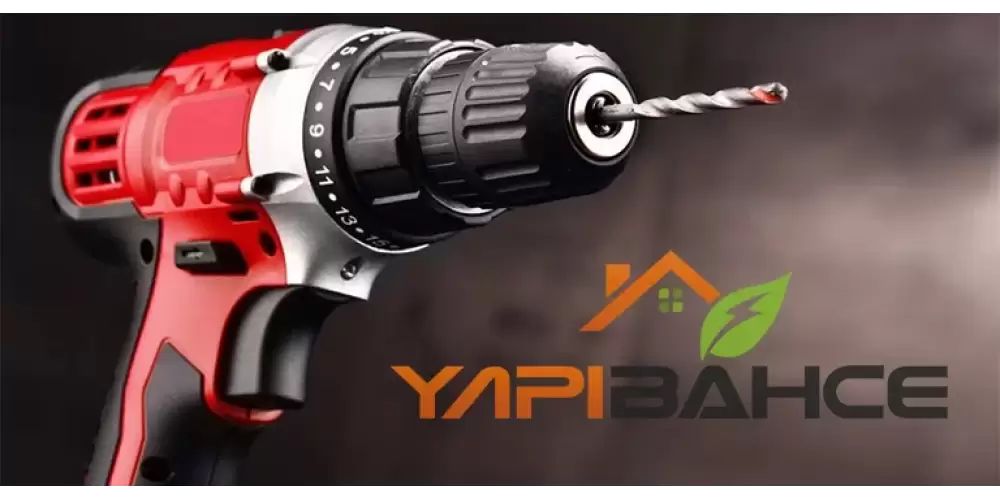
Drills are tools used to drill holes in hard surfaces such as wood, concrete, and marble. Drill types vary depending on their intended use. In daily life, we may need drills for renovation work that requires significant force. This need may be professional in some cases and more amateur in others. Certain work areas necessitate the professional use of drills. While there are drill types specifically developed for such situations, simpler products are also available for infrequent use. The diversity of applications necessitates a variety of alternatives in production. Drill models catering to different user segments are among the most commonly used electronic hand tools.
Drills have a very wide range of uses. Because they cater to both professional and amateur use, they are needed in various fields. Each drill model has different structures. Any situation requiring drilling a hole in a hard surface or enlarging an existing hole creates a potential use for different types of drills. In this sense, the wide variety of products is not surprising. The reason there are separate models for concrete and wood is, in part, because each has different needs. Using a model suitable for concrete on wood would be unnecessary, just as using a model suitable for wood on concrete would be insufficient. In direct proportion to expectations, drill models have such a wide variety that the selection process can be challenging. This wide variety can cause confusion for the user when choosing the right drill. In this article, we will try to provide information about the different types of drills and how to choose the right one.
What are the different types of drills?
In our daily lives, we incorporate a wide variety of items into our living spaces. From the most minimalist home decor to homes laden with furniture, we use various items throughout our houses. This includes furniture, which takes up a significant amount of space. Over time, our belongings may require repair, or there may be times when repairs are needed in any area of our home. Needs such as drilling holes in walls, securing furniture to a fixed surface, or assembling newly purchased disassembled furniture pieces may arise. For such moments, various types of drills come to our aid. Our homes are just a small example of where drills are used ; there are also professional industries where their use is constantly required. Especially in fields like construction, using a professional drill is necessary.
Drill models are available in electric and cordless versions. The choice is up to the user, with priorities such as the intended use and frequency of operation. For long periods of work, or for use at specific intervals or only when needed, you might prefer a different option.
Drill types are divided into categories such as impact drills, non-impact drills, corded drills, and cordless drills.
Impact drills operate by generating energy through the collision of two discs, making them ideal for use on hard surfaces like walls and concrete. A disadvantage of these drills is their relatively quiet operation. While some impact drills are also available in a non-impact version, impact drills are generally considered the most suitable for professional use and are not recommended for minor repair work. Due to their high power output, they are more suitable for high-performance tasks.
Non-impact drills work by directing electrical energy, generated by the compression of air by a piston, to the drill bit. These models are suitable for use on softer surfaces such as wood, metal, and plastic. They are also a popular choice due to their lower noise level compared to impact drills. If you are looking for a drill for general repair work rather than professional projects, you can opt for a non-impact drill. Their ease of use makes them ideal for repair work.
Corded drill models; Due to their corded design, corded drills require a power outlet to operate and are therefore less preferred compared to other models today. Because they need a power outlet, these models are not suitable for use in all areas and lose their functionality during power outages or when a power connection is unavailable nearby. For this reason, there is a greater preference for cordless models instead.
Cordless drills are models that, thanks to their battery-powered feature, do not require any electrical connection after being charged. Due to their minimal electrical needs, cordless drills are ideal for minor repairs and simple tasks.
Is the drill cordless or corded?
The most fundamental difference between electric and cordless drills is that cordless drills only need electricity for charging, while electric drills require a cord and power outlet at all times.
Once fully charged, your cordless drill is ready for use anywhere you need it.
The main advantage of electric drill models is that they can be used whenever there is a cord and a power outlet. Electric drills are more useful in situations where cordless drills may have insufficient battery life. They are especially preferable for long-term jobs.
What should be considered when choosing a drill?
When you need drill models, paying attention to the selection process will make it easier for you to find the right product. In this sense, the important points to consider when choosing drill models are:
• First, you need to determine your intended use and the area where you will be using it. You should specify what purpose you need the drill model for.
• You should evaluate the structure of the surface you will be working on. Accurately determining the hardness level is crucial for choosing the right drill. Concrete, wood, and marble each have different hardness levels. Choosing a small, cordless model for drilling concrete will not guarantee satisfactory results.
• The rotational speed of drill models will affect your choice depending on the tasks you intend to perform.
• For professional work, impact or non-impact drill models are the right choice, while for simpler tasks, cordless drills are preferable.
• The voltage rating of the drill model should be considered during selection. High-power models are preferable for professional use in work environments; otherwise, more standard power options are suitable. A 10-volt model might suffice for simple repairs, but this power will be insufficient for harder surfaces and longer-term projects.
What to Consider When Using a Drill
Drill models aren't always needed for professional use. Sometimes, amateurs might need to use a drill. In these cases, the type of drill the amateur uses is crucial. An impact drill might not be suitable for everyone. Amateur users should consider cordless drills, and if these are insufficient, they should seek professional help. Otherwise, the risk of injury during drill use is high. Furthermore, regardless of whether you're a professional or amateur, it's essential to follow safety rules when using a drill. Using gloves, a hard hat, and safety glasses when necessary will help minimize potential accidents.