


Bahçe Sulama Malzemeleri
Garden maintenance is a field that requires dedication and attention. It is impossible to have a productive garden without proper care of the plants and especially the soil. Water is one of the primary needs of plants. If sufficient water cannot be obtained naturally, human intervention becomes unavoidable. Water needs are even more critical during the summer months, especially when rainfall is low and temperatures are high. Furthermore, with drought becoming increasingly prevalent in our world, the efficient use of water resources is of paramount importance. Therefore, research continues on how to use available resources most effectively.
If the soil is not adequately irrigated , it would be unrealistic to expect healthy plant growth. Maintaining proper soil and a balanced water level is essential for the survival of plants and trees. Fertile soil is a crucial factor in the productivity of plants and trees. Furthermore, the amount of water needed and the frequency of irrigation vary from plant to plant. Each plant has its own unique needs. Therefore, different care may be necessary for each type of plant.
Important Considerations for Watering a Well-Maintained Garden
The first step in deciding on garden irrigation is whether to irrigate from above or below. In general, there are some important points to consider in garden maintenance; briefly:
• In irrigation, it is important to ensure that the moisture is distributed evenly.
• Watering frequently with small amounts of water will be healthier.
• Choosing late at night or early in the morning for watering is more effective.
• Care should be taken to avoid wetting the leaves of the plants during watering. Wet leaves can cause disease. Wet leaves can also develop sunburn marks if left in the sun. To prevent this, care should be taken to ensure that water does not get on the flowers and leaves during watering.
• Care should be taken to maintain the correct amount of water. Correct irrigation means delivering sufficient water to the roots. If sufficient water is not delivered to the plant roots, effective irrigation will not have taken place. And over time, problems will arise in plants and trees that are dehydrated.
Irrigation Methods
Plants are watered using two different methods. The first is overhead watering, and the second is bottom watering.
1. Overhead Irrigation: Overhead irrigation, the fastest and simplest method of watering, involves watering plants using a watering can. In this method, water should be directed towards the roots of the plant, avoiding the leaves and flowers. For effective watering, ensure the roots do not completely cover the soil surface. Otherwise, it will be difficult to adequately water the soil.
2. Bottom Watering: Place the plants, along with their pots, into a bucket and fill it halfway with water. Leave the pot in the water for about 30 minutes; this will meet the plant's water needs.
What are the different types of irrigation systems?
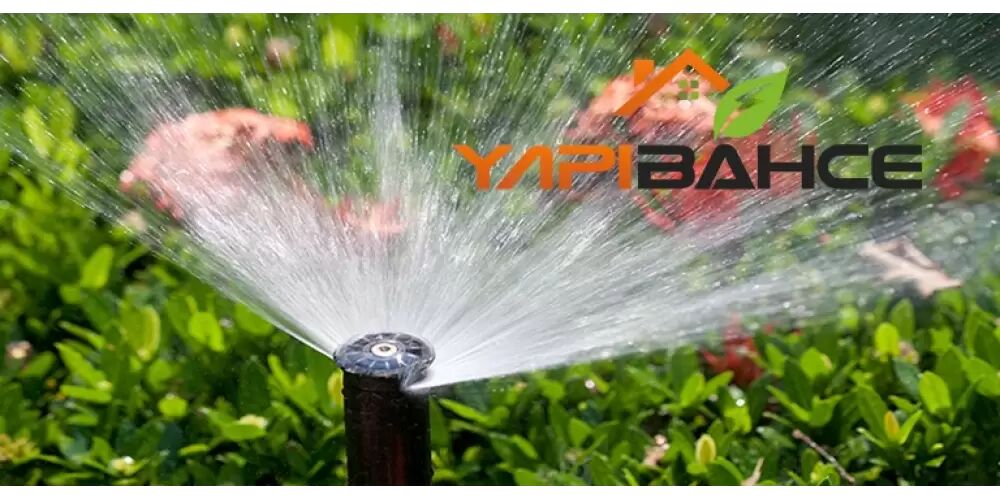
Sprinkler irrigation is one of the methods closest to natural irrigation for gardens. There are two different nozzle options for using sprinkler irrigation: spray and rotor nozzles. Spray nozzles are ideal for narrower areas due to their small size, while rotor nozzles are suitable for larger areas. Spray nozzles follow an umbrella-like irrigation path, while rotor nozzles rotate to perform the irrigation.
Drip irrigation systems are one of the most economical irrigation methods. They deliver the required amount of water directly to the roots of plants. They are frequently preferred for flower care, shrub care, and individual plant maintenance.
Spray irrigation systems are methods that involve watering plants and trees with a fine mist created by sprays that are released into the soil to meet the water needs of the plants and trees.
Anti-siphon irrigation systems are the most commonly used irrigation systems. They are applied using a spray method and feature a 360-degree rotating structure.
Gear-type irrigation systems are a method used for lawns and large gardens. Their working principle is the same as the anti-siphon method. The difference is that they have the ability to regulate pressure and irrigate an area of 25-60 meters.
Advantages of Using an Irrigation System
• Depending on their application areas, irrigation systems offer convenience in irrigating shallow areas.
• Time and labor are saved.
• Unnecessary water consumption can be prevented.
• It enables the efficient and sufficient use of water resources.
• Controlled watering can prevent plants from being affected by excess water.
• It is particularly effective in maintaining the oxygen and moisture balance of plant roots in drip irrigation methods.
• Ensuring that the number of diseases that can occur in plants is minimized,
• It helps prevent erosion and soil loss,
• It offers the possibility of watering every area using a hose of sufficient length.
• The existence of various systems offers different alternatives in terms of cost,
• The ability to adjust pressure settings,
• Preventing the growth of weeds that may occur due to neglect.
With irrigation systems that offer advantages such as these, it can be easier to achieve well-maintained and productive gardens.
The Importance of Timing in Irrigation Systems
Agricultural irrigation systems offer many advantages when used efficiently. Time management is a crucial aspect of irrigation systems. The amount of water plants need varies, as does the timing. Each plant requires a specific irrigation method and timing. Factors influencing watering times include the season, rainfall, and temperature distribution. Less water is needed in spring, while more is needed in summer. While lawns need to be watered twice a day, it's generally better to do so during times when the sun is not shining. Water droplets on plants or grass during sunny hours can cause a magnifying glass effect, leading to burns on the plant surface.
The most important advantage of irrigation systems is the automatic adjustment of timing and quantity. Since automatic irrigation is offered, it allows for sufficient water supply to meet the required amount. In this regard, irrigation timers are of great importance. Thanks to irrigation timers, your gardens will be watered at the times you set. This prevents plants from drying out or suffering damage from untimely watering. For use in short-distance areas, irrigation timers that can be attached to taps allow you to automatically adjust irrigation schedules. For advantageous garden irrigation equipment, you can find help in our Garden Irrigation Supplies category.